Why ERP Matters as a COO or a Supply Chain Executive
Here's why you should be your company's biggest ERP champion.
Connect procurement, inventory, production, and fulfillment with finance so your teams can plan, act, and serve customers with greater confidence.
Navigator Business Solutions helps mid-market manufacturers, consumer products companies, and wholesale distributors improve supply chain operations through SAP Cloud ERP, also known as SAP S/4HANA Cloud Public Edition. We bring business process guidance, implementation services, integration, and ongoing support to help you build an operating foundation for growth.
Your team needs to know what is available, what is coming, what can be produced, and when an order can ship. When those answers depend on separate systems and spreadsheets, employees spend valuable time checking information and resolving surprises.
You may recognize the signs:
Navigator helps you evaluate the processes, data, and technology behind these problems and define a practical path forward.
Supply chain management coordinates the flow of materials, products, and information from suppliers to customers. ERP supports that work by connecting operational transactions with the financial records behind them.
Consider a customer order. Your team checks availability, identifies purchasing or production requirements, tracks the resulting stock movements, and prepares delivery. Connecting these activities helps employees understand how a change in one area affects the next.
SAP Cloud ERP supports purchasing, inventory, manufacturing, sales, and delivery processes. Navigator helps define and implement the workflows your business needs, including connections to other systems where required.
|
Process |
Operational focus |
|---|---|
|
Procurement |
Connect purchasing requirements, supplier information, goods receipts, and invoice processing. |
|
Inventory |
Maintain visibility into stock quantities, locations, and movements. |
|
Production |
Coordinate material requirements, production orders, and manufacturing activity. |
|
Fulfillment |
Connect customer orders, product availability, deliveries, and billing. |
|
Finance |
Relate operational transactions to inventory valuation, costs, and financial reporting. |
Capabilities depend on your selected solution scope, configuration, and integrations.
Give purchasing teams a stronger connection to inventory and production needs. Review how supplier lead times, purchasing approvals, and receiving processes affect material availability and operational continuity.
Improve the processes that keep stock records reliable, from receiving and transfers to production consumption and shipping. For businesses managing multiple locations or traceable products, evaluate location, batch, and serial requirements as part of the design.
Connect production requirements with the materials needed to execute them. Define how planners and supervisors identify shortages, review exceptions, and coordinate changes with purchasing and customer service.
Help teams work from connected order, availability, and delivery information. Identify where manual handoffs, warehouse processes, or disconnected systems make it difficult to meet customer commitments.
Establish relevant measures such as inventory accuracy, inventory turns, order cycle time, and on-time delivery. Set a baseline so your team can evaluate progress after implementation.
Buy with a clearer view of requirements
Give purchasing teams a stronger connection to inventory and production needs. Review how supplier lead times, purchasing approvals, and receiving processes affect material availability and operational continuity.
Build confidence in inventory information
Improve the processes that keep stock records reliable, from receiving and transfers to production consumption and shipping. For businesses managing multiple locations or traceable products, evaluate location, batch, and serial requirements as part of the design.
Align production with material availability
Connect production requirements with the materials needed to execute them. Define how planners and supervisors identify shortages, review exceptions, and coordinate changes with purchasing and customer service.
Support more reliable fulfillment
Help teams work from connected order, availability, and delivery information. Identify where manual handoffs, warehouse processes, or disconnected systems make it difficult to meet customer commitments.
Connect operational improvement to business value
Establish relevant measures such as inventory accuracy, inventory turns, order cycle time, and on-time delivery. Set a baseline so your team can evaluate progress after implementation.
Navigator’s SAP Cloud ERP practice focuses on organizations whose operational complexity requires stronger connections across the business.
Manufacturers: Connect purchasing, materials, production, inventory, and financial processes as manufacturing requirements become more complex.
Wholesale distributors: Coordinate purchasing, inventory across locations, customer orders, and fulfillment as product ranges and transaction volumes grow.
Consumer products companies: Connect inventory and order processes across sales channels, with appropriate integrations for eCommerce, retail partners, and logistics providers.
The right fit depends on your processes, growth plans, data, and willingness to adopt standard practices. Navigator evaluates those requirements before recommending an implementation approach.
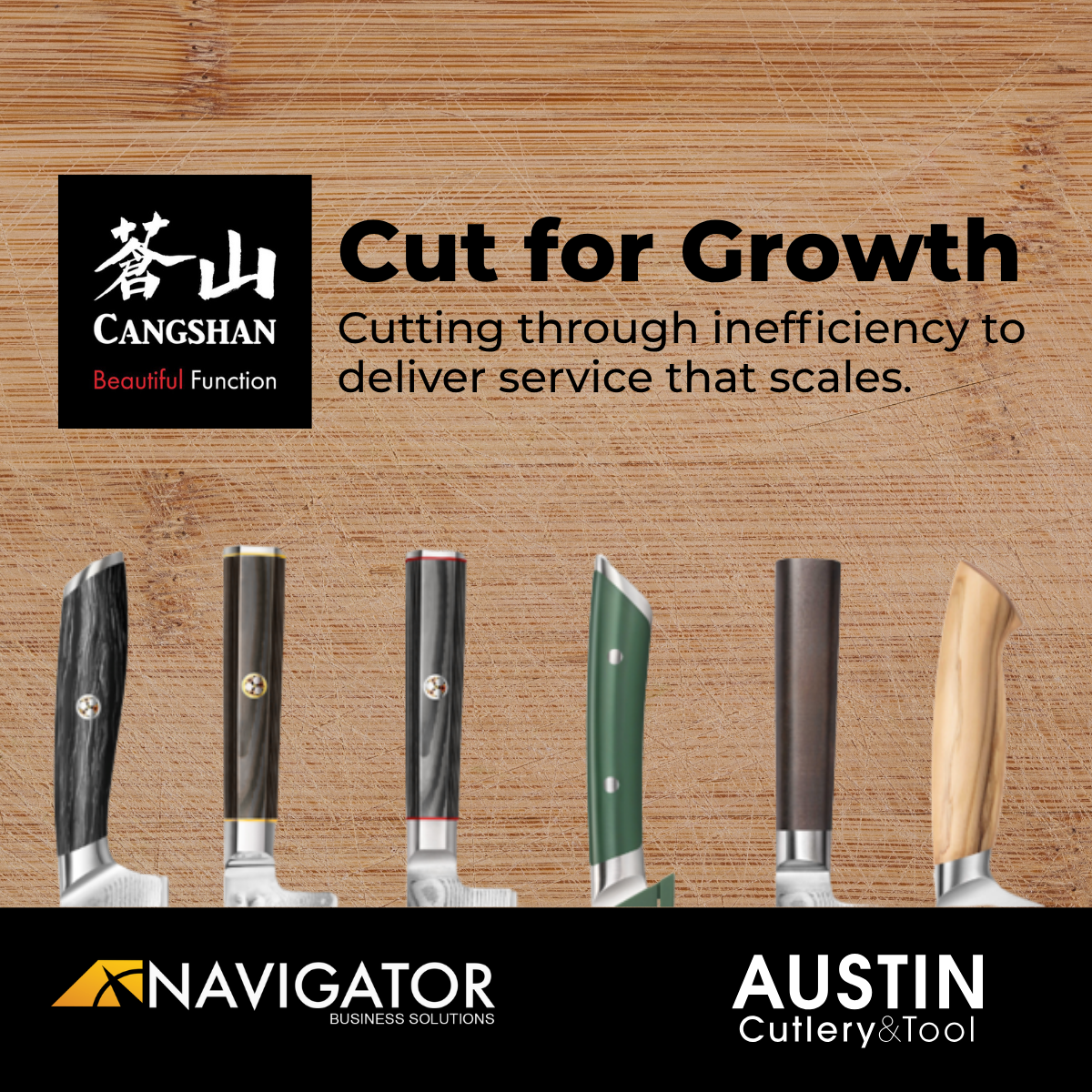
Austin Cutlery & Tool was managing disconnected inventory streams, limited consolidated reporting, and extensive spreadsheet work before implementing SAP Cloud ERP.
In its conversation with Navigator, the company reported that inventory accuracy improved from approximately 50–60% to more than 99%. The team also described faster order fulfillment and a shift toward managing exceptions.
Its experience shows how connected information and a willingness to improve business processes can support operational change.
Your supply chain requirements should guide your technology decisions. Begin by identifying which processes SAP Cloud ERP can support within the proposed scope, then evaluate additional solutions for requirements that extend beyond it.
For more advanced supply chain planning, SAP Integrated Business Planning can be evaluated for demand, supply, inventory, and sales and operations planning. Warehouse, transportation, manufacturing execution, and partner connectivity requirements also need individual assessment.
Navigator helps you distinguish the ERP foundation from additional applications and integrations. Scope, licensing, and implementation requirements should be defined for the proposed solution.
A successful implementation depends on decisions about how the business will operate, as well as how the software will be configured.
Navigator’s fit-to-standard approach starts with established processes and evaluates where they meet your needs. Together, we define requirements, responsibilities, integrations, and measures of success.
Our work can include:
ERP connects processes such as purchasing, inventory, production, sales, and delivery with finance. This gives teams a shared operational foundation and helps them understand how transactions and changes affect other parts of the business.
An ERP evaluation becomes useful when inventory tracking must connect more closely with purchasing, production, order fulfillment, and accounting. Signs include duplicate data entry, unreliable availability information, manual reconciliation, and increasing difficulty coordinating locations or departments.
The appropriate architecture depends on your requirements. Some processes can run within the ERP scope, while others may need specialized applications or integrations. Navigator evaluates planning, warehouse, manufacturing, shipping, and partner connectivity requirements before defining the solution.
Typical areas include item records, units of measure, suppliers, customers, stock balances, warehouse locations, and lead times. Manufacturers also need to assess bills of materials and production data. Your implementation scope determines the final requirements.
Yes. Navigator provides ERP optimization, support, and application management services. An assessment can identify whether process changes, data improvements, training, configuration, or integrations should be prioritized.
Here's why you should be your company's biggest ERP champion.
Market changes occur much more quickly in the modern era, making it nearly impossible to forecast supply and demand historic data alone.
Byron Dyke
CFO
Bioderm, INC
Peter Carbone
COO
Center for Breakthrough Medicines
Leah Peene
Business Analyst
Celonova Biosciences
Scott Haris
VP
TriRx
Terry Rice
Director of Finance
Living Proof Inc.
Christopher Beck
Global Head of IT
Harry's
Ulion Riebe
Head of Finance
Rothy's
Whether your biggest challenge is unreliable inventory, disconnected planning, or manual order handoffs, start with the operational problem you need to solve.
Navigator can help you evaluate how SAP Cloud ERP fits your business and what it would take to move forward.